
Well-Connected City
Strategy 3:
Promoting Digital Management to Lead Development with Innovative Technology
To proactively promote the deep integration of digital technology and artificial intelligence (AI) in the transport field to enhance the overall efficiency of the transport network and facilitate strategic traffic management.
Recommendation 13 –
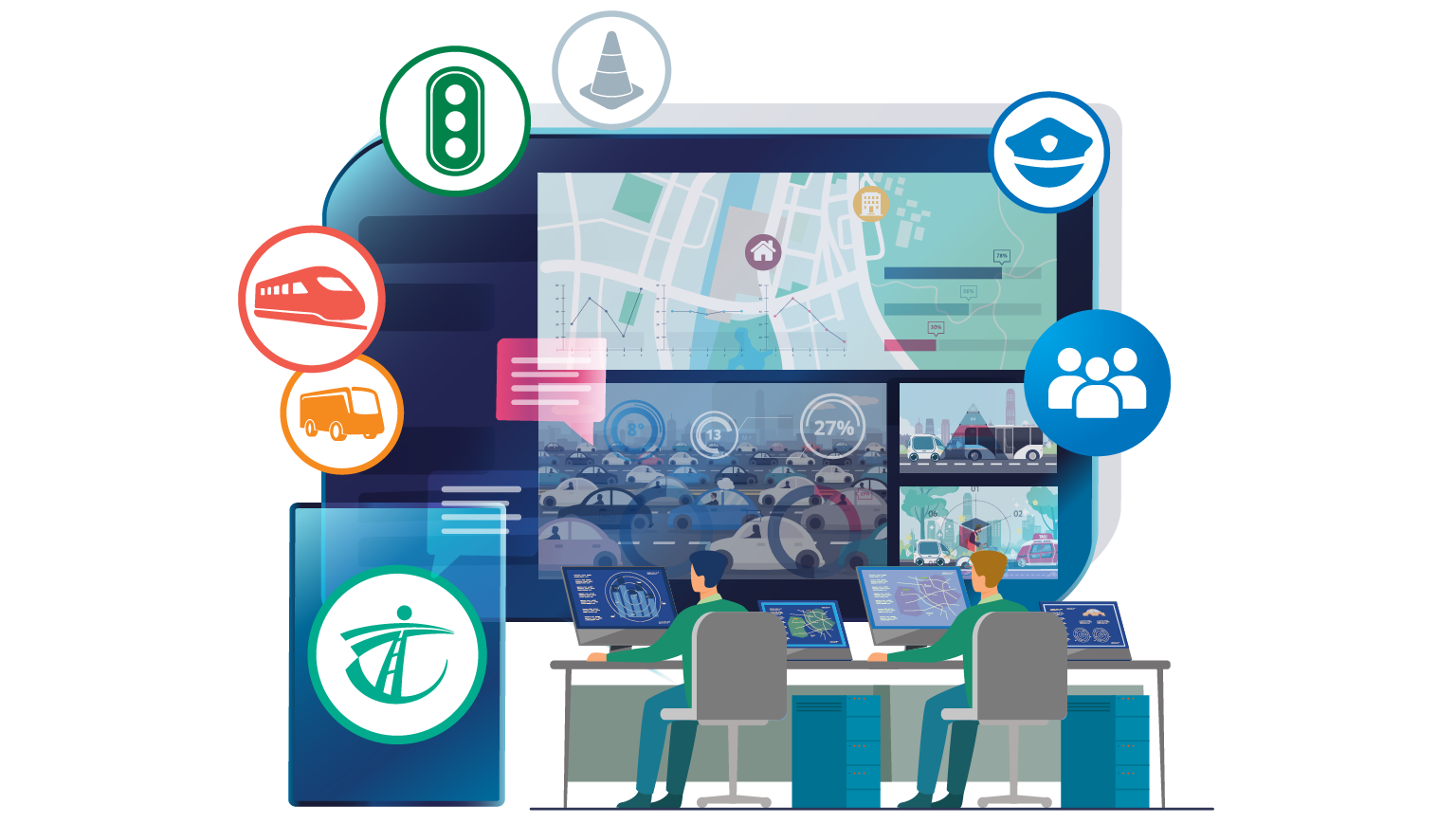
Taking Forward a Traffic Management Platform to Enhance Digital Traffic Management
The Government will commence a study on the pilot project for a regional Traffic Management Platform in 2026 to prepare for the first regional pilot application in urban areas, followed by gradual extension to other districts,. This paves the way for the full automation of the traffic and transport management work in the future.
In the future, the Traffic Management Platform will integrate various traffic and transport data, utilising big data analytics and artificial intelligence technologies to predict traffic flow, identify bottlenecks, and develop emergency response plans. It will provide real-time traffic and transport information and share it with relevant government departments and public transport operators, enhancing the efficiency of the traffic and transport system.
The platform will align with the implementation of smart motorways and the expansion of Real-time Adaptive Traffic Signal System*, continuously optimising road traffic efficiency, and providing data for long-term policy and infrastructure planning to promote smart city development.
*To be gradually expanded to about 50 suitable independent signalised junctions in the territory starting from the second half of 2026, and to be continued to roll out in accordance with the project schedules of various new development areas
Recommendation 14 –
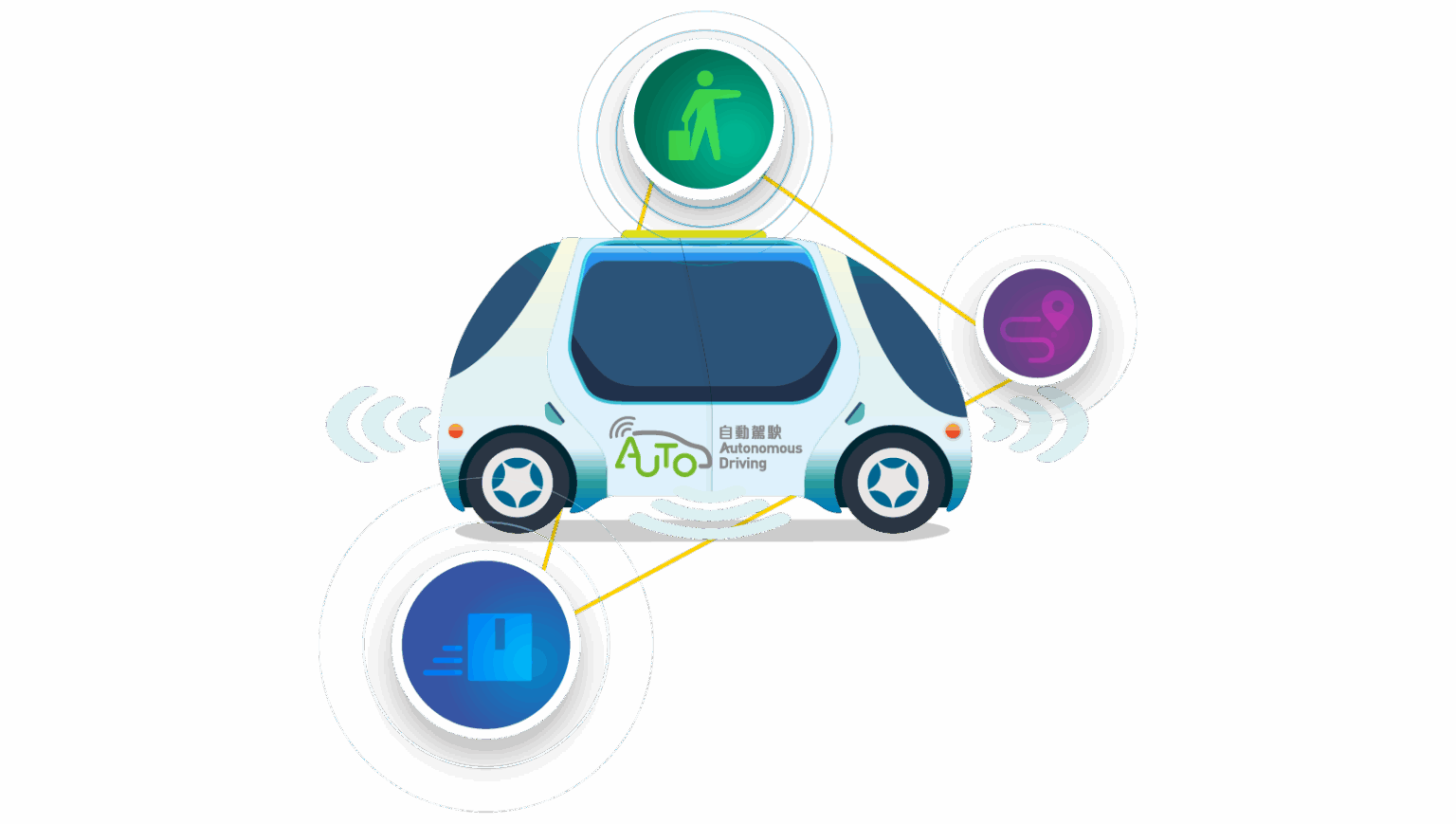
Promoting the Safe and Orderly Driverless and Large-scale Development of Autonomous Vehicles Towards Commercial Operation
Hong Kong is accelerating and enhancing the introduction and promotion of autonomous vehicle trials and applications in various communities by integrating policy support, regulatory backing and financial subsidies.
The Government continues to advance the technology towards driverless operation in a safe, orderly and efficient manner, and also aspires to achieve commercial operations, encouraging the industry to leverage Hong Kong as a platform to explore overseas markets, particularly those with right-hand drive systems.
We will progressively increase the number of trials and gradually expand cross-district trials and application networks, and orderly expand the application network of autonomous vehicles; also study the use of autonomous vehicles to connect with other transport modes; and support a phased approach to conducting trials of remotely operated driverless autonomous vehicles without in-vehicle backup operators but with only remote backup operators, and pave the way for the future full realisation of driverless applications through phased expansion of road sections and scale.
To further promote the development of autonomous vehicles, the Commissioner for Transport will chair the “Autonomous Vehicle Application Promotion Task Force,” which will work across departments and with industry stakeholders to review the progress and needs of autonomous vehicle projects. The task force will also provide guidance on the testing locations and vehicle categories for autonomous vehicles, as well as the licensing arrangements necessary to support their transition to commercial operation.
With the gradual maturity of autonomous driving technology, we expect related services to be operational in selected communities within the next one to two years, and to gradually expand the scope of commercial applications.
Recommendation 15 –
Developing Low-altitude Economy to Foster Transport and Logistics
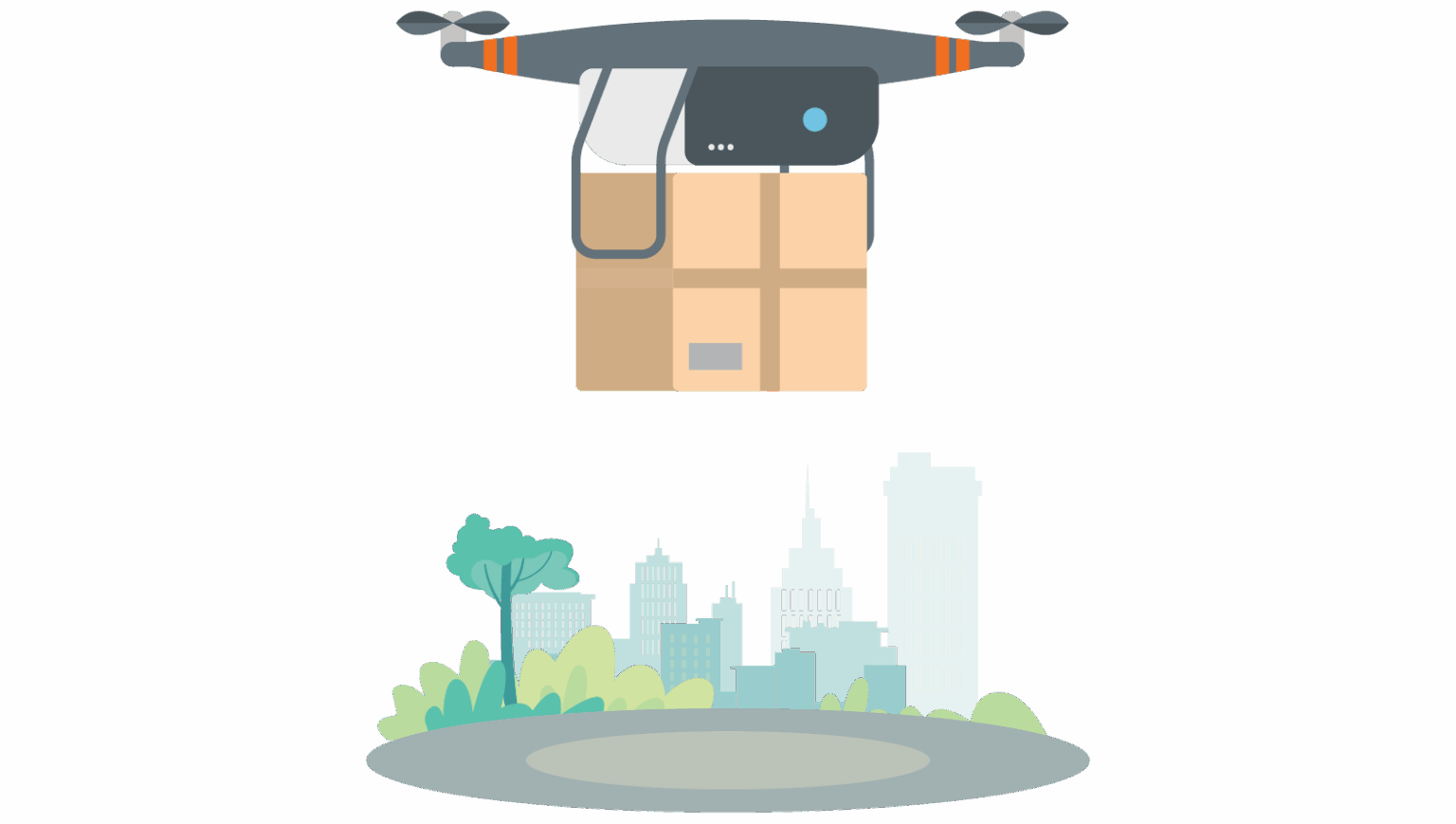
The low-altitude economy offers a new dimension for the development of industries such as transport and logistics in Hong Kong. Hong Kong is actively pushing ahead with the development of the low-altitude economy to inject new momentum into the local economy, for example, by utilising drones for more efficient and cost-effective logistics delivery. The Government will progressively roll out projects under the advanced version of the low-altitude economy “Regulatory Sandbox ” starting in the first half of 2026, with the aim of formulating the “Action Plan on Developing Low-altitude Economy” by the end of 2026.
The Government will continue to consolidate experience from various “Regulatory Sandbox” projects and will draw reference from the latest developments on the Mainland, internationally, and in other advanced region, to establish appropriate general regulatory standards, a smart infrastructure system, relevant supporting network facilities, and corresponding road transport infrastructure to facilitate logistics distribution, in the longer term, thereby promoting the sustainable development of the low-altitude economy in the transport and logistics sector.


-
Strategy 1:
Developing Transport Hubs for Strengthening Internal and External Connectivity to Embrace New Opportunities Strategy 2: Benefiting People’s Livelihood through Providing Smart, Green and Diversified Transport - Strategy 3: Promoting Digital Management to Lead Development with Innovative Technology Strategy 4: Optimising Infrastructure and Road Use to Boost Transport Efficiency
- Strategy 5: Building a Green and Low-Carbon Living Circle through Transport Planning Strategy 6: Ensuring a Safe and Inclusive Environment for Healthy and Vibrant Travel









Please rotate your device
into portrait orientation
Traffic and Transport Strategy Study Virtual Portal is designed to be viewed in portrait orientation on mobile devices. Please rotate your device in order to view the website content properly.